


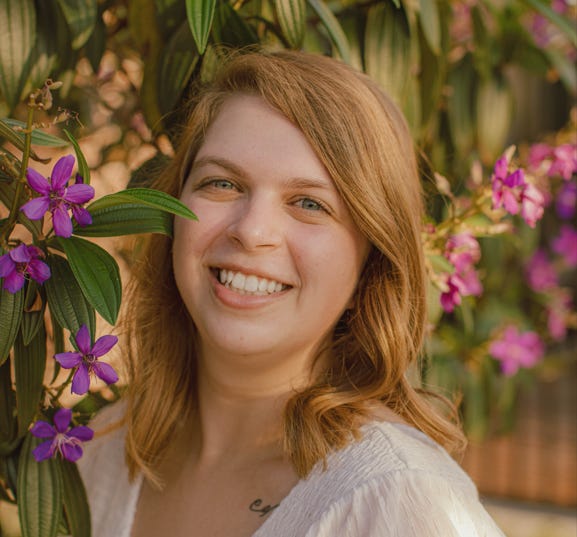
Have you always had a love for books?
Always. Since a young age, I was always the girl who had a nose in a book. I started reading way above my grade level in school, and never wanted to stop. As I got older, this translated into my own writing and then my passion to help other authors with their stories.
How long have you been a literary agent?
I am approaching my 2 year anniversary as a literary agent this September!
What agency are you associated with?
Creative Media Agency
What does your wish list look like/what genres or tropes are you looking for?
My manuscript wishlist is on our agency website and also on ManuscriptWishlist.com. Overall, I’m looking for fun, fresh, and voicey stories. My list leans more cozy and campy but in the commercial space. If something leans a bit darker or more serious, it’s probably not for me. Though I do love dark or heavy topics, I need to see a light or hope at the end of the tunnel. I’m also a huge sustainability nerd, and love anything that can bring elements of eco-fiction (climate change, species extinction, etc) into another genre. I’m also looking to uplift and prioritize marginalized voices as much as possible. As someone living with an autoimmune disease, I would love to see more stories with invisible disabilities, and characters that aren’t typically represented on the page.
What would you consider an automatic rejection?
There are a couple of things in a query that are an automatic pass for me and that’s firstly if the word count is too high/low for the genre, or if the pitch/characters don’t make sense for the genre (i.e. a 13 year old main character but the manuscript is pitched as an adult story). Another common reason I reject is if the query told me nothing about the book, but noted how wonderful the author is and why they will be successful. I am sure every author is a wonderful person, and that’s why we ask for a bio paragraph to learn more about you, but I also need to know what your book is about so I can get excited to read it! Finally, an automatic rejection comes from me if my trigger warnings aren’t respected. I don’t tend to shy away from much, but I do have very specific triggers that unfortunately don’t have exceptions, and I still tend to get submissions going against them.
What makes you excited to work with an author?
The first thing that excites me about working with an author is their story. If I could not put it down, if I’m squealing while jotting down editorial notes, and simply cannot get the book or characters out of my head, I’m done for. Then, when we get on a call, and I can feel the passion and excitement from the author not just about the work but about their craft as a whole, I’m sold. My team is my favorite part of working in this industry, and I will fight for each and every one of my authors with everything I have. As long as they are excited to be here and are willing and ready to put in the work, they have me for life.
Should authors self-publish if they can’t find an agent?
I always tell authors to find the best path in publishing that works for them. To do that, you need to ask yourself what your goals are as an author, what you want for your book. If your dream is to be published by a big publishing house and try to become a bestselling author, then traditional publishing is the heart of what you want to do. So keep querying and try to get an agent to help you do that. If you just want your books out there, you don’t mind how you reach readers, and you want a bit more control over that process, self-publishing or publishing with a small press might be a great route. There is no wrong path to publishing—it’s all about which one works best for you and your goals. And just because you self-publish one book, doesn’t mean you can’t query the next one, or vice-versa. One of the best things about publishing is that it’s fluid, and you can experiment with different methods.
What is the best advice you would give aspiring authors?
Write the book. Even if the first draft is horrible, even if you don’t feel confident in the plot or the characters, and especially if you think it won’t go anywhere. Dedicate the time, sit down, and write the thing. Put words onto pages. You can go back and fix it later, you can re-draft, you can find a new idea if it doesn’t work out. But you won’t get anywhere if you don’t write it first.
Do authors really need comp titles in their query letters?
Big yes. Comp titles are so hard, we know! But they are also so important. They show us where you think your book belongs on a shelf and where it fits in the current market. Of course, you may not know this exactly, but doing this shows us you care about your story and are willing to put in the work to understand these things. Comps can also clue us into your story a bit more, if you tell us what themes/tropes of certain comps are similar to your book.
Are you currently accepting submissions?
Yes! I am actively open to a variety of genres in Middle Grade, Young Adult, and Adult.
What do you do in your spare time?
I try to read for fun as much as possible. I’m also an avid show watcher so I am usually on the couch bingeing the latest hot series, or running around Disney World with my husband.
Where can people find you?
My website (andiesmithbooks.com) has all my agency and editorial information. I’m also very active on X, BlueSky, IG, and TikTok (@andiesmithbooks)
Thank you, Andie, for this insightful interview!
More interviews you may have missed:
and
Is the Desire to be a Writer Enough?
I hope you all have a beautiful and productive week ahead!

Love these interviews! This information is so helpful. Thanks, Katrina and Andie!